


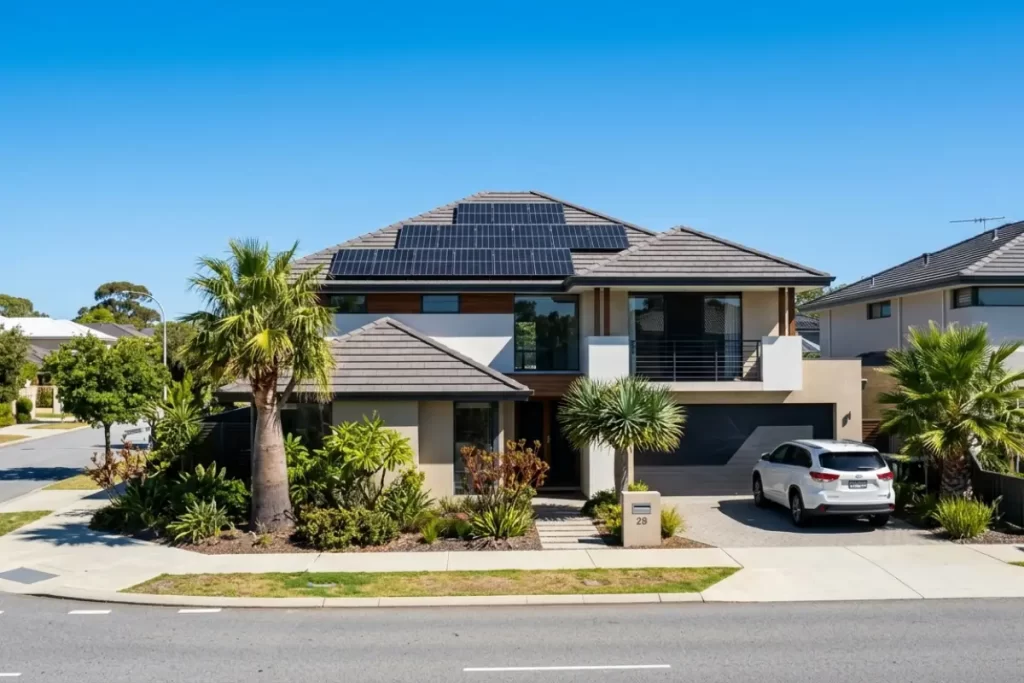
Perth gets more sunshine than almost any Australian capital, so solar should be a no-brainer. Yet the upfront cost still makes many homeowners hesitate.
The honest answer is that solar is worth it for most Perth households, but not equally for everyone. Your daytime electricity use, system size, and roof matter just as much as the sunshine.
This guide gives you the real payback picture, the local factors that shape your return, and how to tell whether solar genuinely suits your home before you spend a dollar.
Table of Contents
- Too Long; Didn’t Read
- Why Perth is strong for solar
- Payback period and savings
- What changes whether it is worth it
- Feed-in tariffs and self-consumption
- How to maximise your return
- Is a battery worth adding?
- Common questions
Too Long; Didn’t Read
For a Perth household that uses a reasonable amount of electricity during daylight hours, solar typically pays for itself within roughly three to six years, then delivers savings for the rest of the system’s life.
The biggest single factor is how much of your own solar power you use directly, rather than exporting it. The more daytime use, the faster the payback.
To put that in plain terms, every unit of solar you use yourself saves the full retail rate you would otherwise pay the grid. Every unit you export earns only the lower feed-in rate, so self-consumption is worth several times more than export.
Why Perth is strong for solar
Perth combines high sunshine hours with one of the highest solar uptake rates anywhere in the world, which tells you the economics generally stack up.
According to the Australian Renewable Energy Agency, one in three households in Western Australia has rooftop solar. That level of adoption reflects a mature market with strong sun and established installer competition.
The high sun hours mean a given system in Perth generates more electricity than the same system in a cooler, cloudier capital, which directly improves the return.
Payback period and savings
Payback is simply how long the savings take to cover the upfront cost. In Perth, that is usually faster than the national picture because of the strong solar resource.
A common 6.6 kW system is the popular choice for an average home. The exact savings depend on your electricity rate and how much power you use while the sun is up.
The federal small-scale renewable energy scheme also reduces the upfront price through certificates that installers usually apply as a point-of-sale discount. That discount shortens the payback period and is one reason mid-sized systems represent strong value.
The table below shows why two households paying the same for a system can see very different paybacks. Daytime usage, not panel count, decides the outcome.
| Household type | Daytime usage | Worth it? |
| Family home, someone there during the day | High | Strongly worth it |
| Couple working from home | Moderate to high | Worth it |
| Empty home all day, use at night | Low | Worth it only with a battery or load shifting |
What changes whether it is worth it
Two identical homes can get very different values from solar. These factors explain the gap.
When you use electricity
Solar produces during the day. If most of your usage is in the evening, you export cheaply and buy back expensively unless you shift loads or add a battery.
Roof orientation and shading
North-facing panels generate the most over a day in Australia. Shading from trees, chimneys, or neighbouring buildings cuts output and lengthens payback.
System size and quality
An undersized system leaves savings on the table, while an oversized one exports power at a low rate. Matching the system to your usage is where a quality installation pays off. A specialist such as Solar Installation Perth.com can assess your roof, usage pattern, and shading to size the system correctly, which is the single biggest lever on your long-term return.
Feed-in tariffs and self-consumption
A feed-in tariff is what your retailer pays for the solar power you export to the grid. In Western Australia, these rates are modest, which is the key to understanding solar value here.
Because export rates are low and buying power from the grid is comparatively expensive, the smart play is to use as much of your own solar as possible. Running the dishwasher, washing machine, and pool pump during the day captures far more value than exporting.
This is why two homes with the same panels can see very different savings. The one that consumes its own power wins.
How to maximise your return
Once the panels are on the roof, your habits decide how fast they pay back. A few simple changes lift self-consumption without spending another dollar.
Shift heavy loads into daylight hours. Run the dishwasher and washing machine on a midday timer, heat water during the day if you have an electric system, and schedule the pool pump for the sunniest part of the afternoon.
Pre-cool the house with the air conditioner while the sun is generating, rather than waiting until the evening peak when you would be buying expensive grid power.
Keep the panels reasonably clean and unshaded. Dust, leaves, and bird droppings cut output, and a quick rinse a couple of times a year recovers the generation you have already paid for.
Is a battery worth adding?
Batteries are the most common upgrade question, and the honest answer depends on your evening usage.
A battery stores daytime solar for use at night, which suits households that are out all day and use most of their power after dark. It lifts self-consumption but adds a high upfront cost that lengthens the overall payback.
If your daytime usage is already high, a battery adds less because you are consuming most of your solar directly anyway. For many Perth homes, sizing the panels well and shifting loads delivers a faster return than adding storage.
If you do consider a battery, look at any current state or federal incentives and your typical evening draw before committing, since those two figures move the maths more than anything else.
Conclusion
Solar panels are worth it for most Perth homes thanks to strong sun, a mature market, and a fast payback for households that use their own power during the day. The return comes down to your usage pattern, roof, and correctly sizing the system, so match those to your home before you buy.
Thinking about your wider home energy use? Read our related guide on improving your home’s insulation to cut energy use.
Common questions
Quality panels typically carry performance warranties of around 25 years, and most keep generating well beyond their payback period, which is what makes the long-term return attractive.
No. Solar pays back on its own through daytime self-consumption. A battery can add value if you use a lot of power at night, but it lengthens the overall payback.
Yes, though at reduced output. Perth’s high number of clear days means cloudy-day losses have a smaller impact on annual generation than in cloudier cities.
A well-installed, owned system is generally seen as a selling point because it lowers the buyer’s running costs. The effect is strongest when the system is paid off, and the savings are easy to demonstrate from past bills.
Very little. An occasional cleaning to clear dust and leaves, plus a periodic check that the inverter is reporting normal output, covers most homes. Keeping an eye on generation lets you catch a fault before it costs you months of lost savings.
A standard grid-connected system shuts off in a blackout for safety, so the panels alone will not power your home. Only a system with a compatible battery and backup capability keeps the lights on during an outage.