
A hornet lands. You feel that deep, burning sting. Your first instinct is to brush it off and move on. Most people do exactly that, and for most people, that is fine.
But the gap between “painful afternoon” and “medical emergency” is narrower than most people think, and it is measured in minutes. Between 2011 and 2021, hornet, wasp, and bee stings caused an average of 72 deaths per year in the United States alone, according to the CDC’s National Vital Statistics System. The majority of those deaths came down to one failure: people did not recognise a dangerous reaction fast enough.
This guide gives you a clinical framework for reading your symptoms clearly, knowing exactly when the situation crosses into emergency territory, and handling a hornet sting correctly from the first 60 seconds onward.
Table of Contents
- What a Hornet Sting Does to Your Body
- Normal vs. Abnormal Reactions: Know the Difference
- Anaphylaxis: The Life-Threatening Reaction
- When to Call Emergency Services Immediately
- How to Treat a Hornet Sting at Home
- What NOT to Do After a Hornet Sting
- Who Is Most at Risk of a Severe Reaction?
- Hornet Sting Reaction Comparison Table
- Conclusion
What a Hornet Sting Does to Your Body
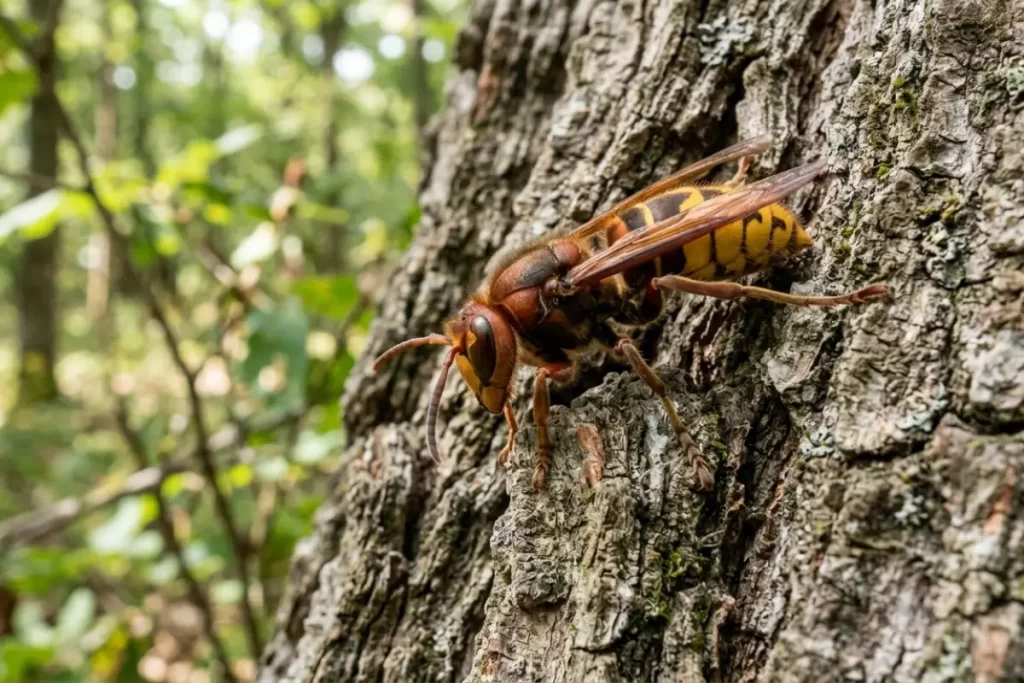
Hornets inject venom through a stinger that they can use multiple times. The venom is a complex cocktail: acetylcholine and serotonin cause immediate, sharp pain, while phospholipase A2 breaks down cell membranes and amplifies tissue damage.
Your immune system detects this immediately. Mast cells in the skin flood the area with histamine, blood vessels dilate, and fluid leaks into the surrounding tissue. The result is the familiar swelling, redness, and heat at the sting site.
In most people, this response stays local and resolves within 24 hours. In people with venom hypersensitivity, the immune system misreads the venom as a catastrophic, body-wide threat, and what follows is anaphylaxis.
Normal vs. Abnormal Reactions: Know the Difference
Normal Local Reaction
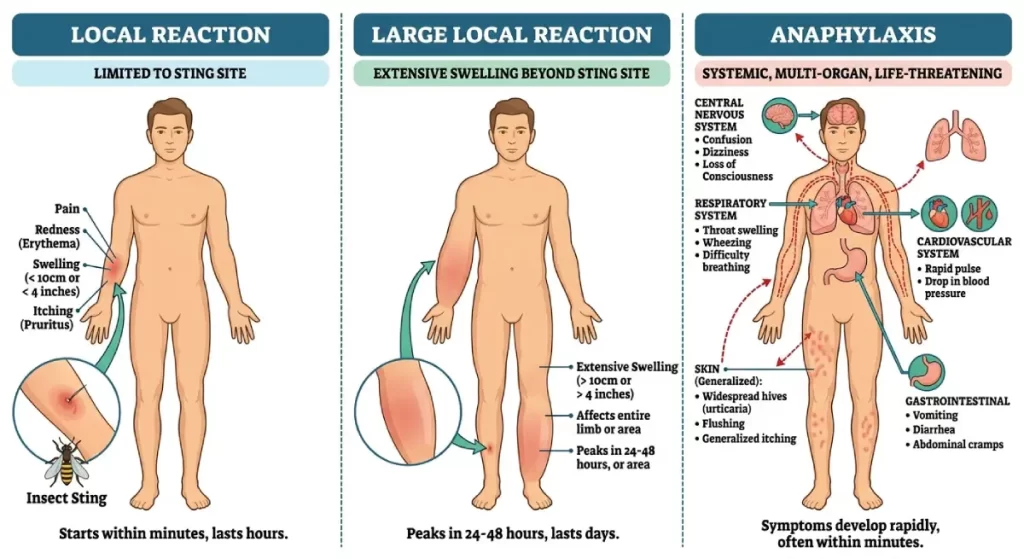
A normal reaction stays confined to the sting site. Expect sharp, burning pain peaking within 10 to 15 minutes, a raised red welt, localised swelling under 10 cm, and mild itching as the venom disperses.
These symptoms typically resolve within 24 hours. No medical attention is necessary unless the reaction worsens or new symptoms appear.
Large Local Reaction (LLR)
Some people develop swelling that extends well beyond the sting site, covering more than 10 cm and sometimes spreading across an entire limb. This is called a large local reaction. It peaks at 24 to 48 hours and can take up to a week to fully clear.
An LLR looks alarming but is not anaphylaxis. It does, however, signal meaningful immune sensitivity. People with repeated LLRs carry a significantly elevated risk of progressing to anaphylaxis with future stings, and an allergist review is strongly recommended.
Anaphylaxis: The Life-Threatening Reaction
Anaphylaxis is a systemic allergic reaction that hits multiple organ systems at once. It typically begins within 5 to 30 minutes of a sting, though onset within an hour is documented.
Recognise these warning signs immediately:
Skin and face:
- Hives, flushing, or itching spreading beyond the sting site
- Swelling of the lips, tongue, or throat
- Pale or bluish skin tone
Respiratory:
- Difficulty breathing, wheezing, or a tight chest
- Stridor (a high-pitched sound on inhaling)
Cardiovascular:
- Rapid or weak pulse
- Sudden dizziness or loss of consciousness
- A sensation of blood pressure dropping
Gastrointestinal:
- Sudden stomach cramps, nausea, or vomiting appearing within minutes of a sting are gastrointestinal signals of anaphylaxis, not a coincidence.
Neurological:
- Acute anxiety, confusion, or an overwhelming sense of impending doom
Any two or more of these symptoms appearing together after a sting is a medical emergency. Do not wait to see if they settle.
When to Call Emergency Services Immediately
Call 000 (Australia) or your local emergency number without hesitation if any of the following occur after a hornet sting:
- Throat or tongue swelling
- Difficulty breathing or swallowing
- Fainting or near-loss of consciousness
- Severe chest pain or a suddenly racing heartbeat
- Ten or more stings on the body, regardless of how you feel right now
Do not drive yourself. Anaphylaxis can cause sudden collapse mid-route. Call 000, stay still, and keep the person calm while you wait.
If you or someone with you carries an epinephrine autoinjector (EpiPen), use it at the first sign of systemic symptoms and call 000 immediately after. Epinephrine buys critical time; it does not replace emergency treatment.
How to Treat a Hornet Sting at Home
For a confirmed local reaction with no systemic warning signs, follow these steps in order:
Step 1: Leave the area
Hornets release an alarm pheromone when they sting, which recruits other hornets to attack. Move at least 15 metres from the nest before doing anything else. Once the immediate danger has passed, arrange professional nest removal. For Melbourne households, Pest Control Services Melbourne.com can eliminate the nest safely before it becomes a repeat problem.
Step 2: Skip the stinger search
Hornets, unlike bees, do not leave a stinger behind. There is nothing to remove.
Step 3: Wash the site
Soap and water clean the wound and reduces the risk of secondary infection.
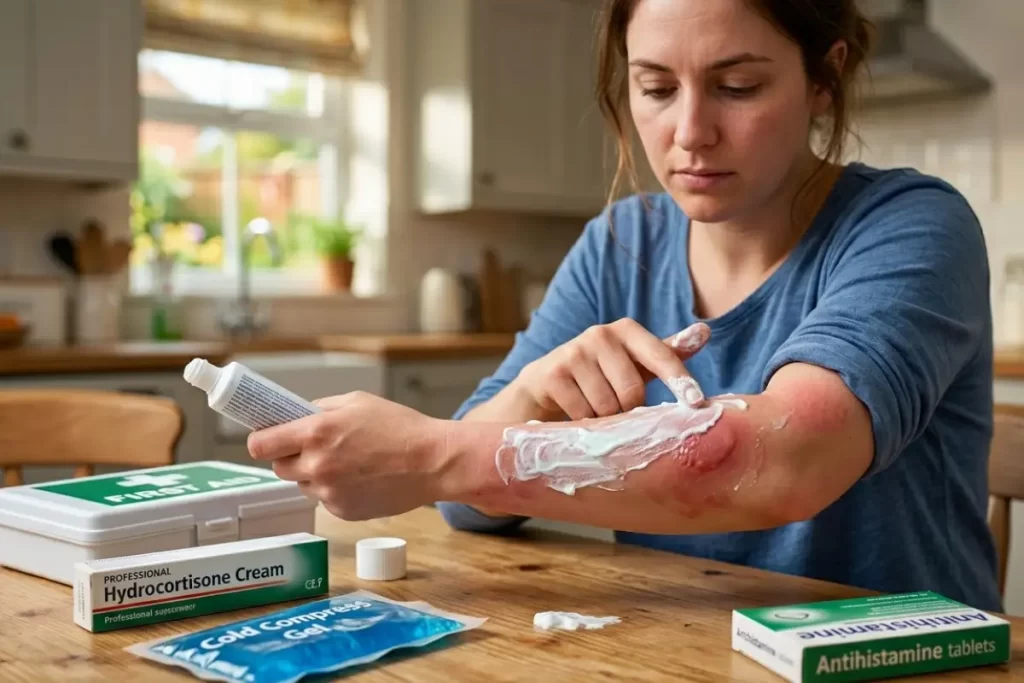
Step 4: Apply a cold compress
Wrap ice or a cold pack in a cloth and apply it for 10 minutes on, 10 minutes off. Cold slows venom spread and reduces localised swelling.
Step 5: Take an oral antihistamine
Cetirizine (Zyrtec) or loratadine (Claratyne) reduce itching and localised swelling. Follow the dosage on the packet.
Step 6: Use a pain reliever
Ibuprofen and paracetamol both manage pain effectively. Ibuprofen also carries an anti-inflammatory benefit.
Step 7: Monitor for 30 to 60 minutes
Watch for any systemic symptoms during this window, particularly if you have been stung before or suspect a sensitivity.
What NOT to Do After a Hornet Sting
These common responses actively make outcomes worse:
Squeezing or scratching the sting site increases venom absorption and raises the risk of infection.
Applying mud, toothpaste, or tobacco carries zero clinical benefit and introduces bacteria directly into broken skin.
Drinking alcohol dilates blood vessels and accelerates venom distribution through the body.
Relying on antihistamines alone during anaphylaxis is a fatal error. Antihistamines are too slow to stop systemic anaphylaxis. Only epinephrine interrupts that cascade.
Who Is Most at Risk of a Severe Reaction?
People with a prior anaphylactic reaction to insect venom. A history of severe reaction means your risk of anaphylaxis with the next sting sits between 25% and 65%. That is not a number to ignore.
Older adults. Cardiovascular complications from anaphylaxis are significantly more dangerous in people with pre-existing heart conditions.
People with mastocytosis. This rare mast cell disorder dramatically amplifies anaphylaxis severity and requires specialist management.
Anyone stung many times at once. Mass envenomation from 10 or more stings can produce toxic reactions in people with no prior allergy. Hornet venom is more concentrated than bee or common wasp venom, and the cumulative dose matters.
People without an EpiPen who know they are allergic. Treatment delay is the primary driver of sting-related deaths. Carrying an autoinjector and knowing how to use it closes that gap.
Hornet Sting Reaction Comparison Table
| Feature | Normal Local Reaction | Large Local Reaction | Anaphylaxis |
| Swelling area | Under 10 cm | Over 10 cm, may spread to limb | Body-wide (hives, face, throat) |
| Onset | Immediate | 12 to 24 hours | 5 to 30 minutes |
| Duration | Up to 24 hours | Up to 7 days | Minutes, potentially fatal |
| Pain pattern | Sharp, localised | Aching, throbbing, spreading | Variable, often overshadowed by other symptoms |
| Systemic symptoms | None | None | Yes: breathing, BP, consciousness |
| Recommended treatment | Cold compress, antihistamine, pain relief | Antihistamines, possible oral steroid (GP guided) | Epinephrine (EpiPen) + call 000 immediately |
| Medical review needed | No | Yes: see an allergist | Emergency department, non-negotiable |
Conclusion
A hornet sting becomes life-threatening only when your immune system treats the venom as a body-wide crisis rather than a local one. The difference between a manageable reaction and a fatal outcome comes down to recognising the three categories of response, identifying systemic warning signs fast, and calling 000 the moment anaphylaxis begins. Know which category you are in, act within minutes, and do not wait to see if it gets worse.